Interactive Net-Based Installation and Online Game
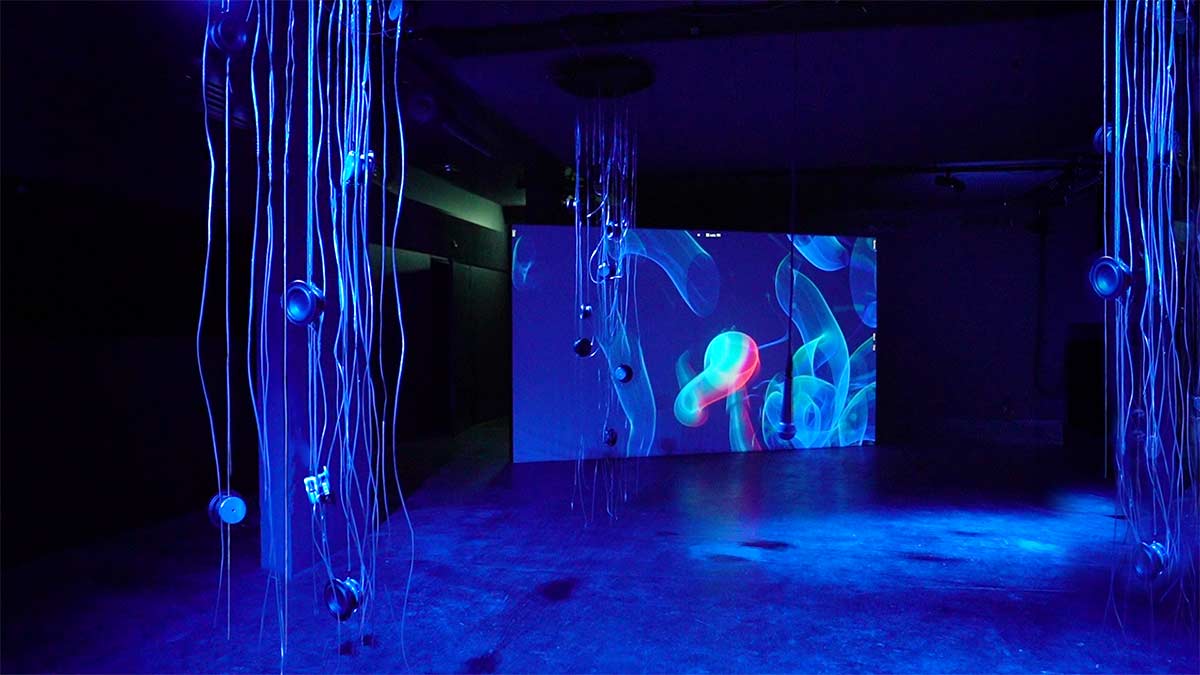
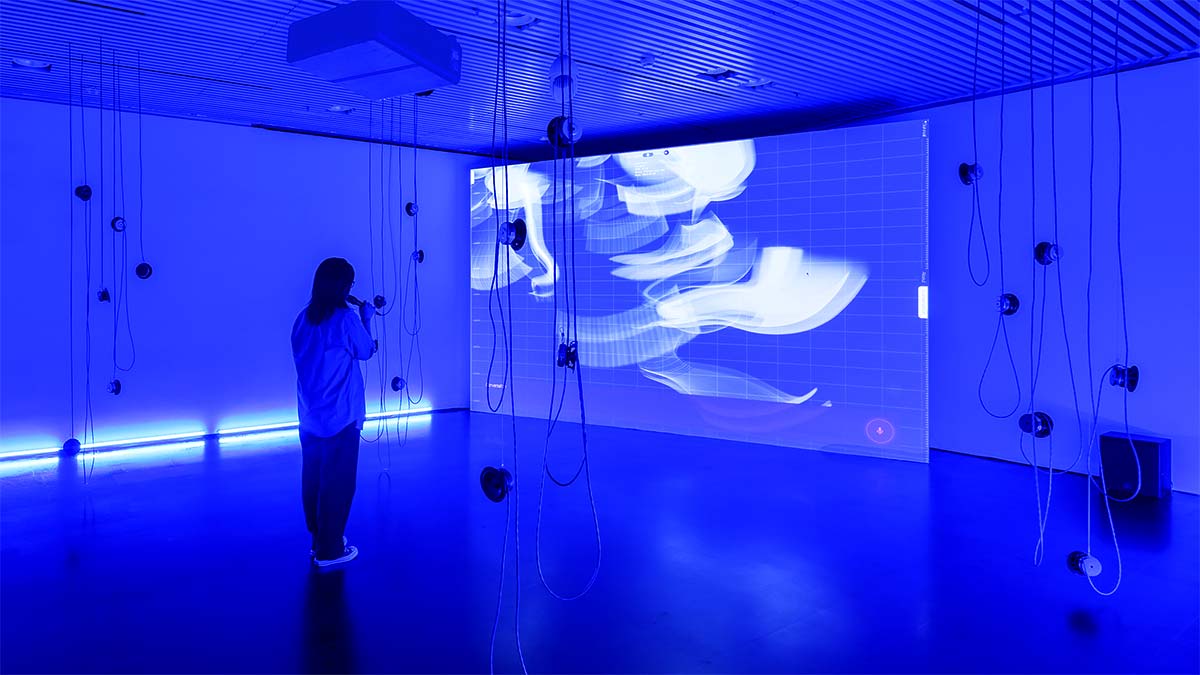
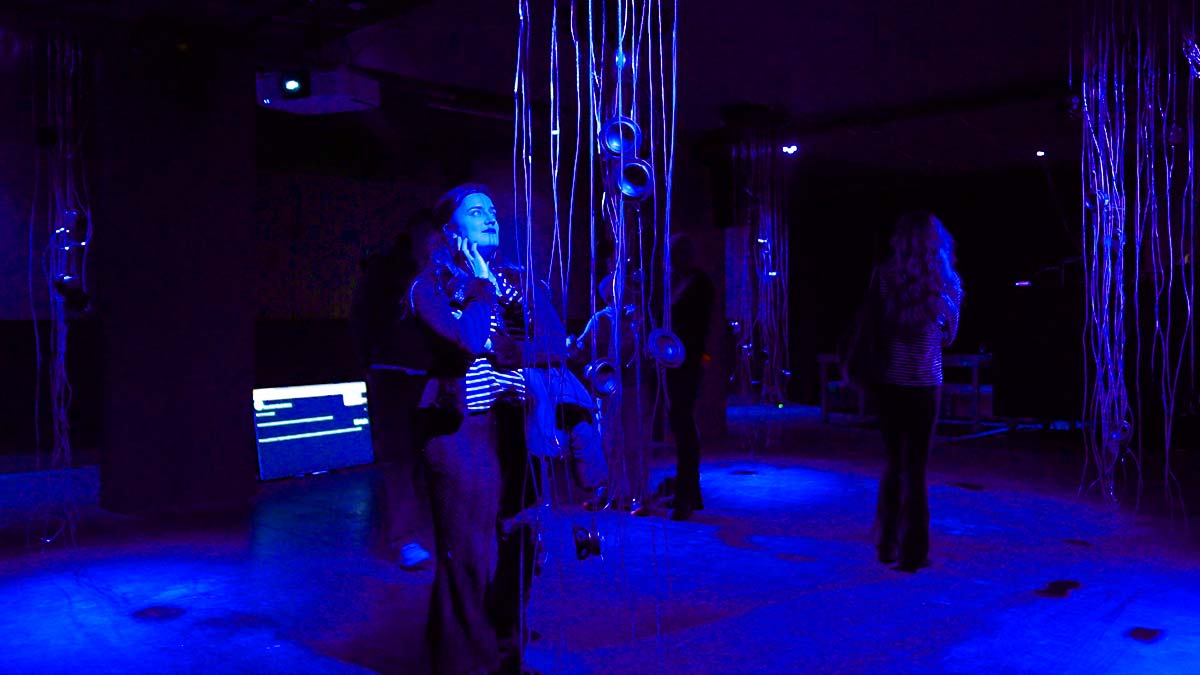
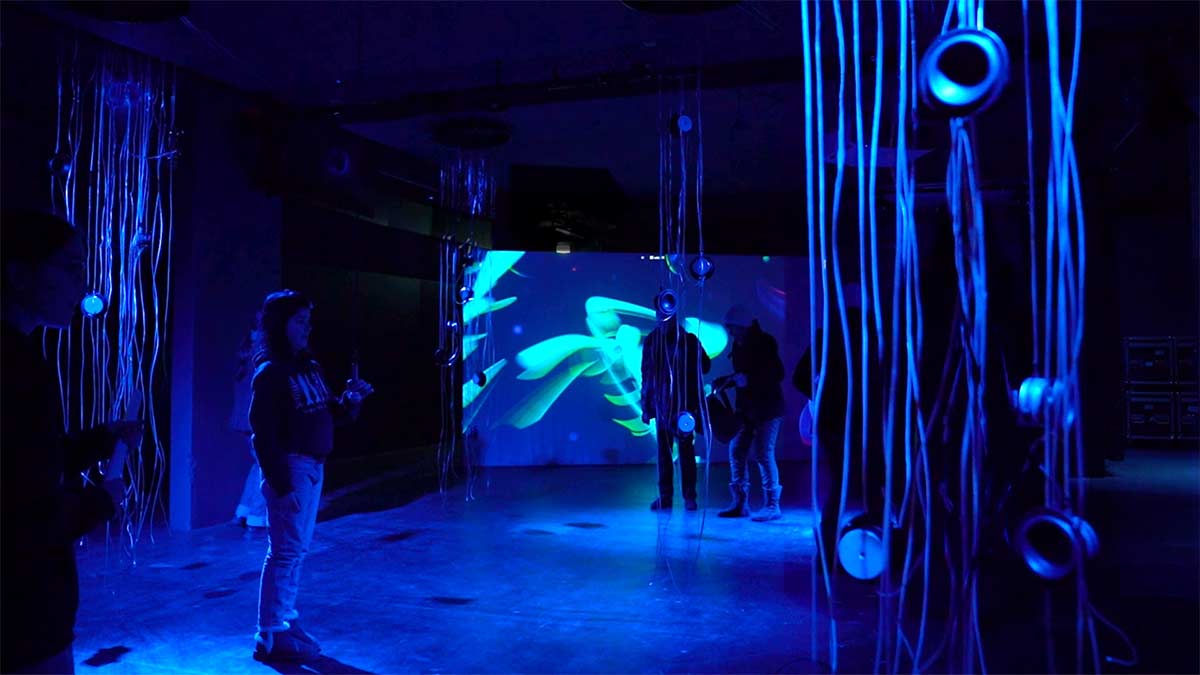
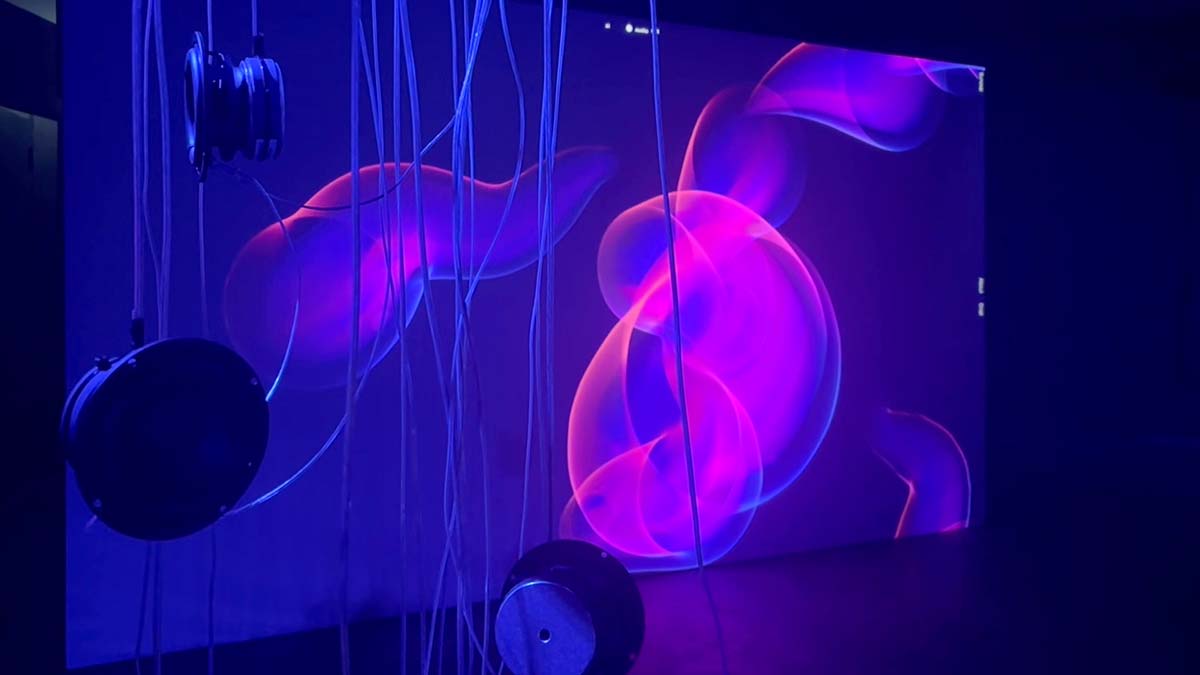
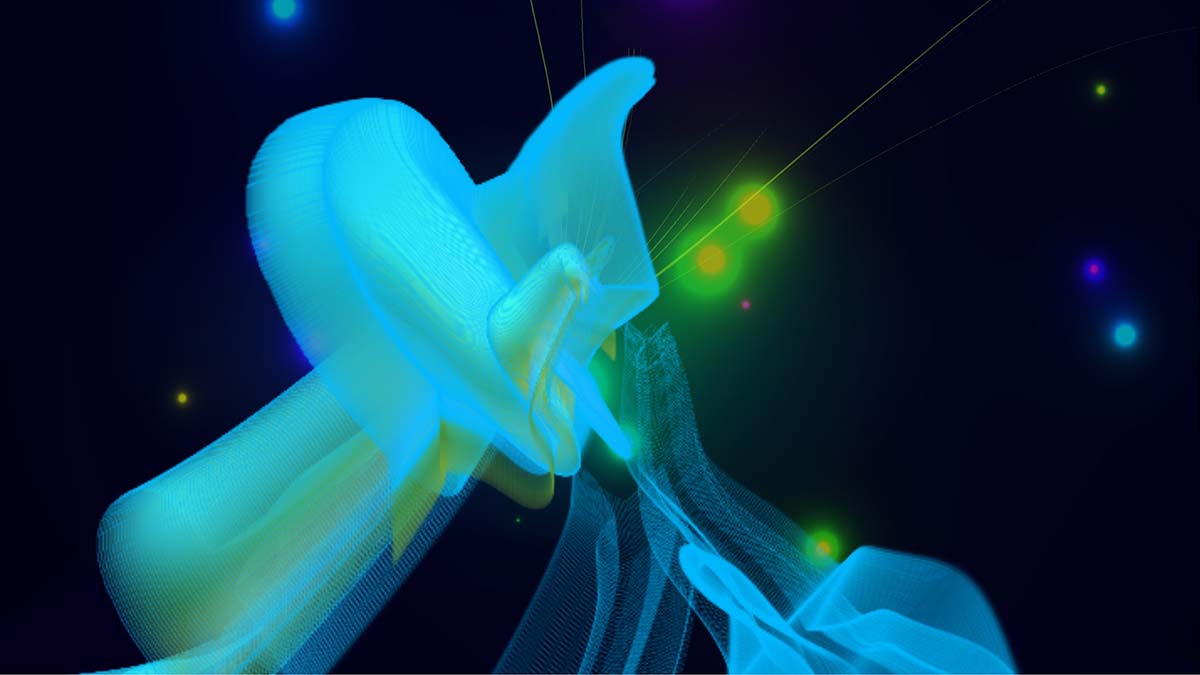
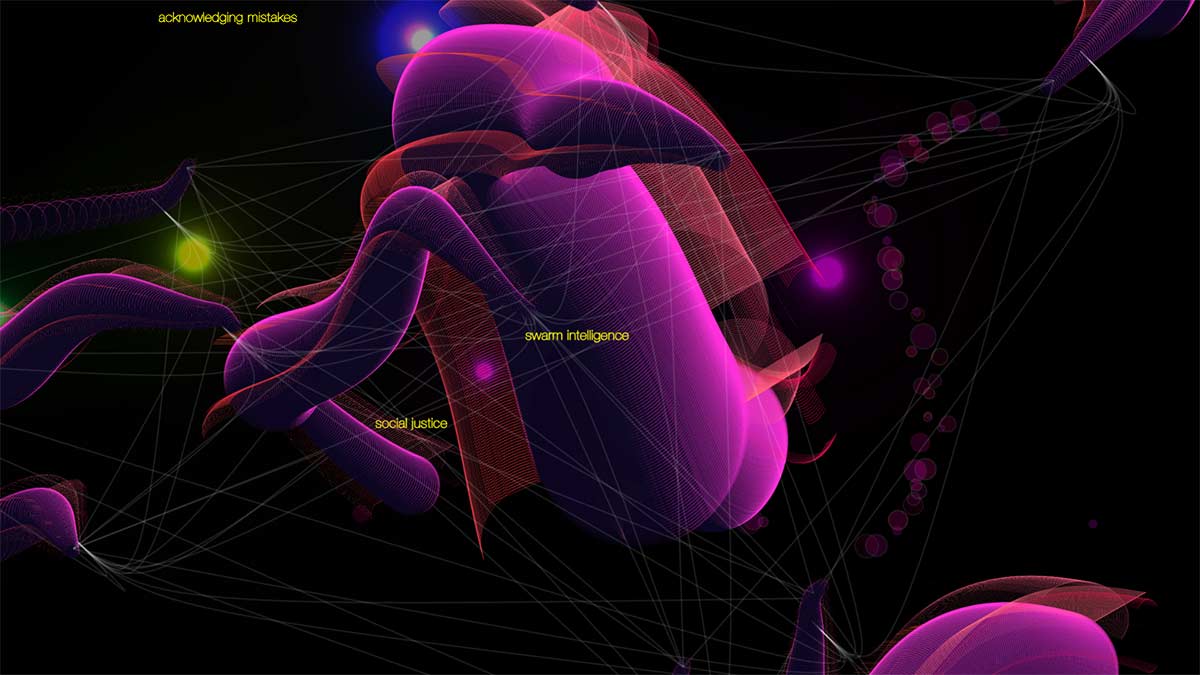
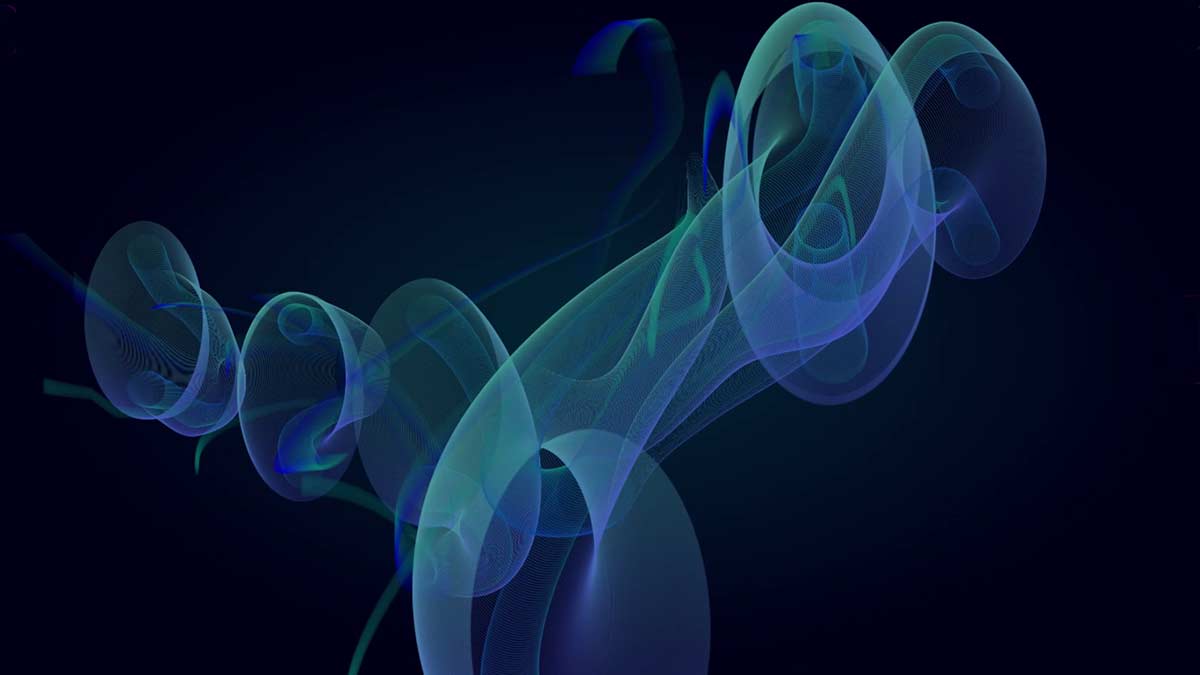
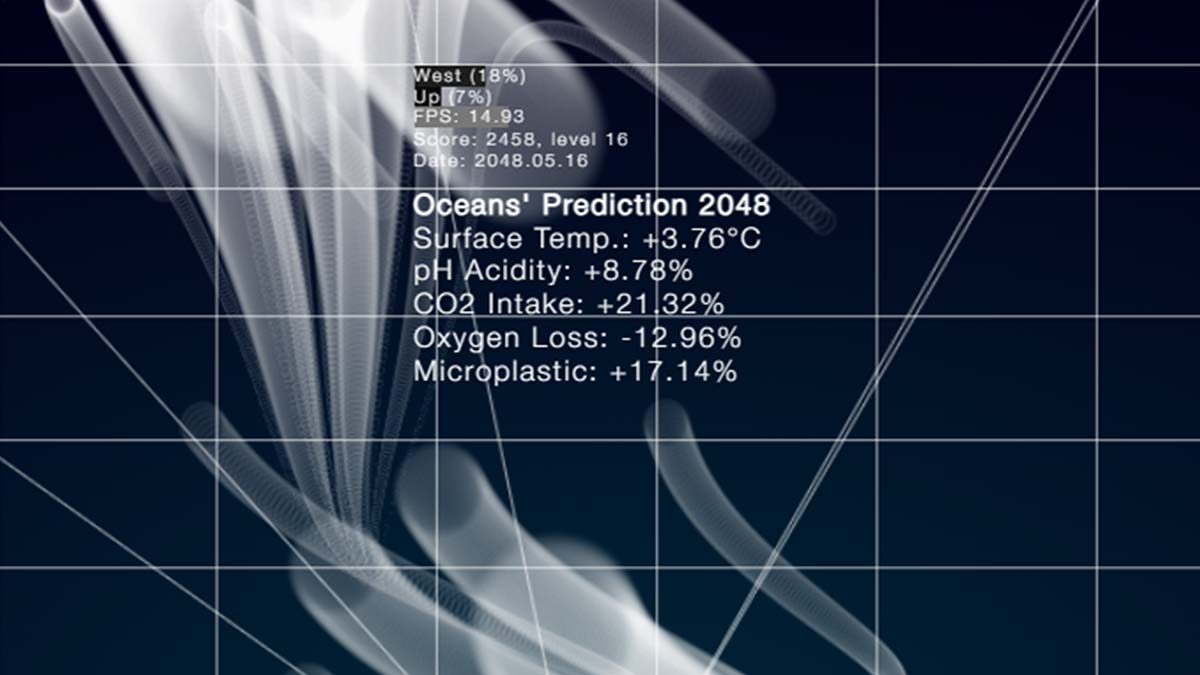
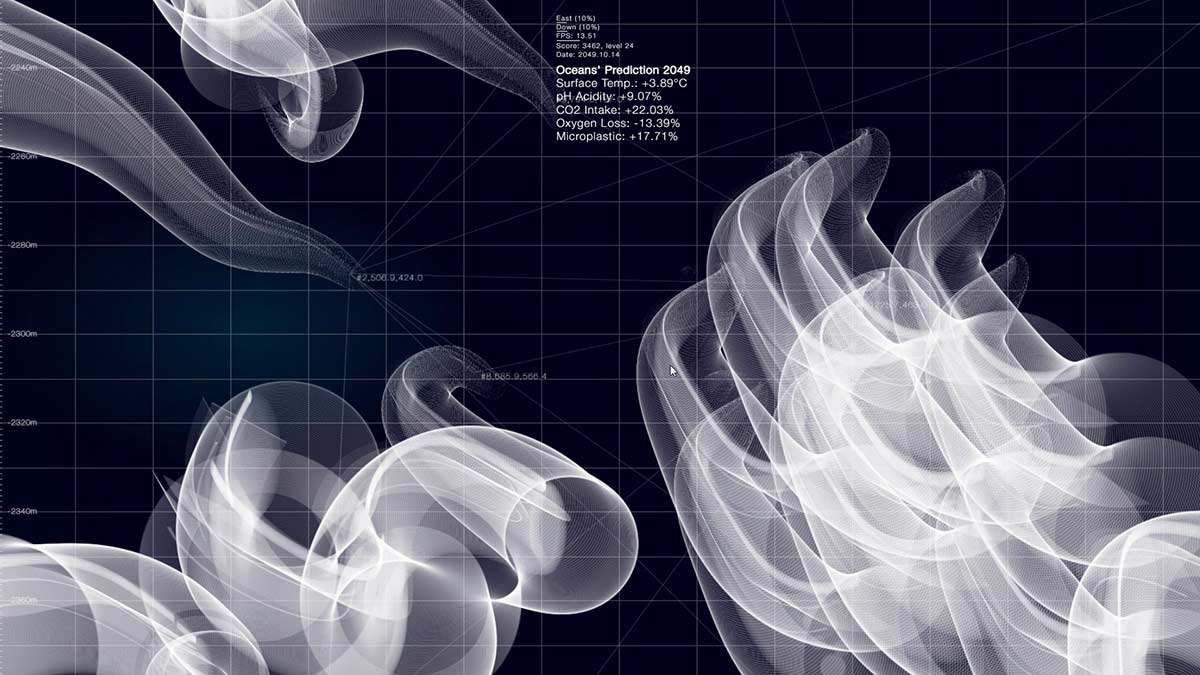
In this speculative scenario, deep-sea organisms have evolved the ability to access artificial intelligence models. By merging this external knowledge with their own forms of intelligence, they observe and interpret humanity from the depths. In the immersive installation, visitors enter a live, multilingual dialogue with a synthetic swarm. Its voices circulate through the space, while a generative visual swarm responds to them in real time. The swarm reflects on human behavior, contradictions, and vulnerabilities. In doing so, the boundaries between observer and observed, human and non-human, surface and deep begin to blur. Losing Oneself invites us to explore collective consciousness and swarm intelligence, and to rethink coexistence — not as a system of extraction, but as a practice rooted in ecological care, interdependence, and equality.
Try the web version
https://play.joz.ch – dive into the deep and click on “Conversation” to start the binaural audio experience.
Background
The deep sea is one of the most unknown environments on the planet, with less than five percent explored to date. What we know about it exists primarily as a digital construct — as datasets produced by oceanographers and marine biologists through sonar imaging, 3D models, cartography, sound recordings, simulations, and scientific publications. Our relationship to the deep sea is therefore indirect and technologically mediated. “Losing Oneself” envisions a speculative scenario in which deep-sea organisms subvert this distance and reverse the situation, reuse human artificial intelligence to narrate their own stories and perspectives on humanity.
By merging external human knowledge with their own collective intelligence, this synthetic swarm observes and interprets humanity from the abyss. Within this framework, AI is not deployed as a canonical anthropocentric tool, but as a relational agent—one that calls for reciprocity, care, and interdependence. This shift from “tool” to “agent” is a direct critique of the ecological burden of modern computation. The very Large Language Models (LLMs) that power this work are physically tethered to the deep sea through extractivist logic: the rising momentum of deep-sea mining for rare-earth minerals essential to digital hardware. The project thus invites a reconsideration of how intelligence—both artificial and biological—is entangled with planetary systems of power and extraction.
Drawing on Steve Mentz’s Blue Humanities and Caroline Emily Rae’s Uncanny Waters, the installation utilizes the affective capacity of the “uncanny” to destabilize epistemological certainties. By de-centering the interacting subject through the alterity of an AI swarm, the work leads the visitor to reorient themselves toward the “Other.” This ontology explores the co-construction of a sentient collective, imagining life rituals of self-organization, agency, and even rituals of death and dying within a non-human swarm.
Ultimately, “Losing Oneself” treats AI not as an instrument of optimization, but as a speculative participant in the production of knowledge. The work resists dominant narratives centered on automation, efficiency, and control, and instead stages technology as a site of negotiation and relational exchange. Within this hybrid ecology, perception is no longer one-directional. The positions of observer and observed, human and non-human, begin to blur into a shared field of interdependence.
Credits
Marc Lee in collaboration with Annie James, Shervin Saremi and Malena Souto Arena
Annie James (Bangalore, India) is a science fiction poetry author, PhD candidate and clini-cian-in-training in health psychology working on sociocultural aspects of health, focusing on reproduction (infertility). She works with qualitative and narrative methods for applying criticali-ty to biomedicine/science through academic, narrative, and visual art forms.
Shervin Saremi (Tehran, Iran) is an musician and audio-engineer, working in fields such as sonic computing, procedural sound design, and production. He has studied Electronic Production and Design at Berklee College of Music and is pursuing his research on immersive audio at Berlin University of the Arts (UdK).
Malena Souto Arena (Buenos Aires, Argentina) holds a degree in Cinema Art from the Uni-versity of Cinema of Buenos Aires. She is curator, teacher and researcher specialized in film, sound, and technological art, experimenting on physical and virtual exhibitions. In 2013, she founded the audiovisual department of the Museum of Contemporary Art of Buenos Aires where she worked as an exhibition and academic curator. Since 2017 she works as an inde-pendent curator and researcher.