Mobile App as Interface for Net-Based Installations
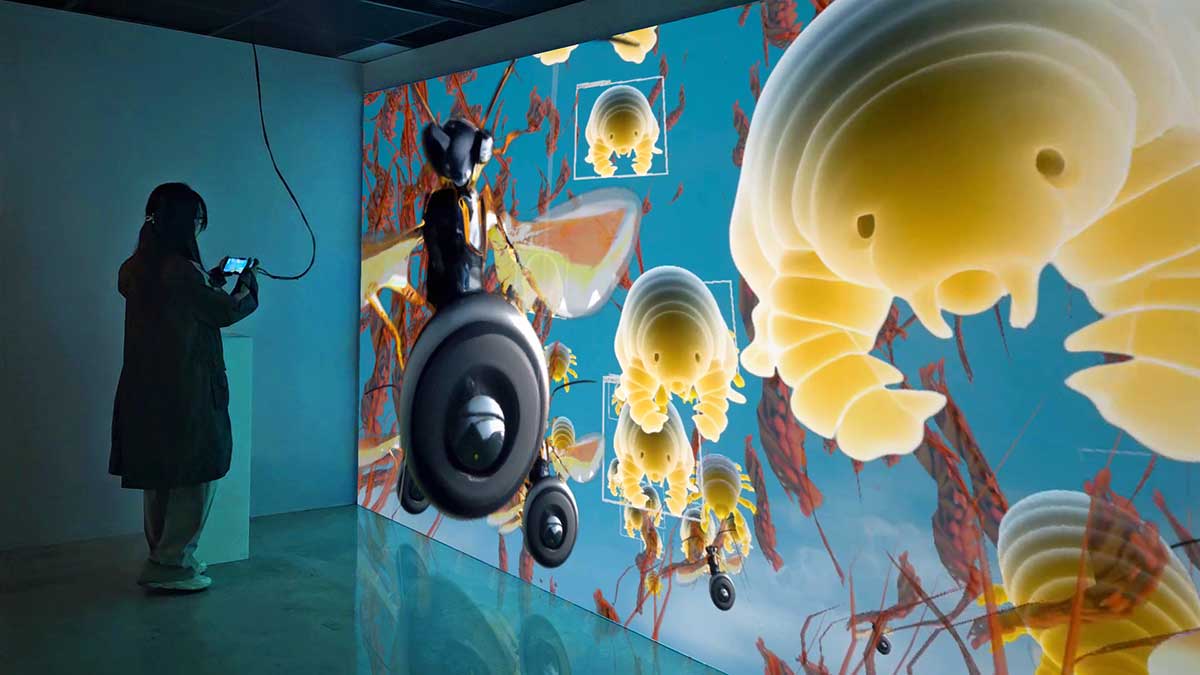
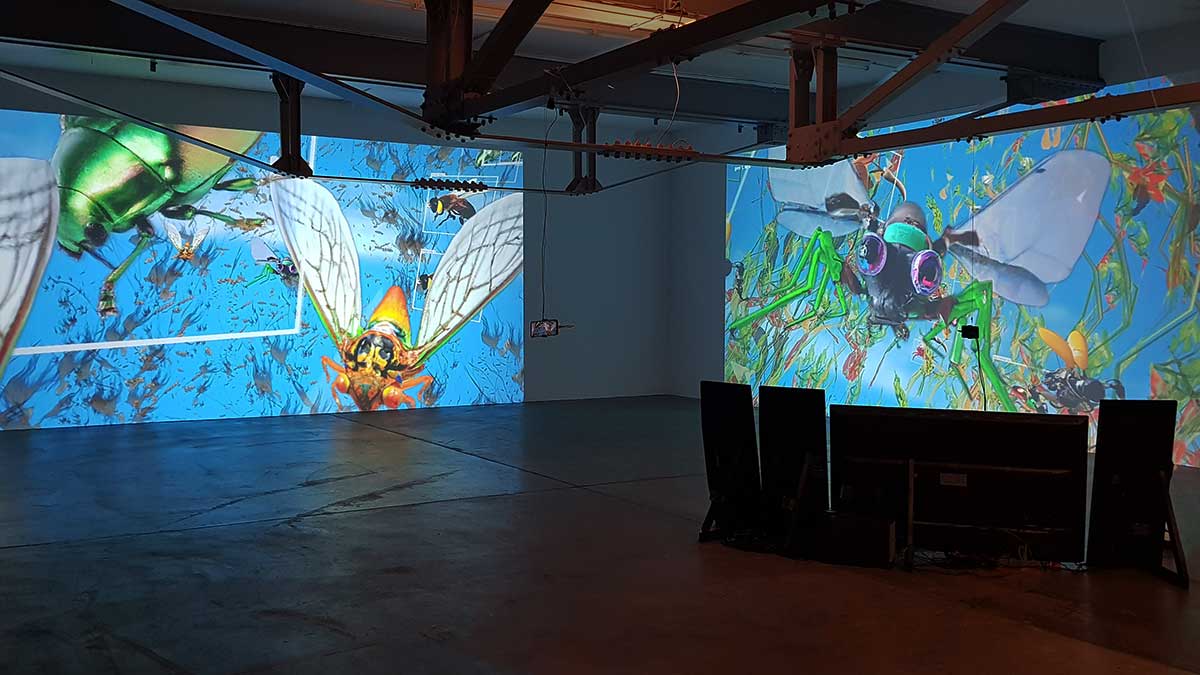
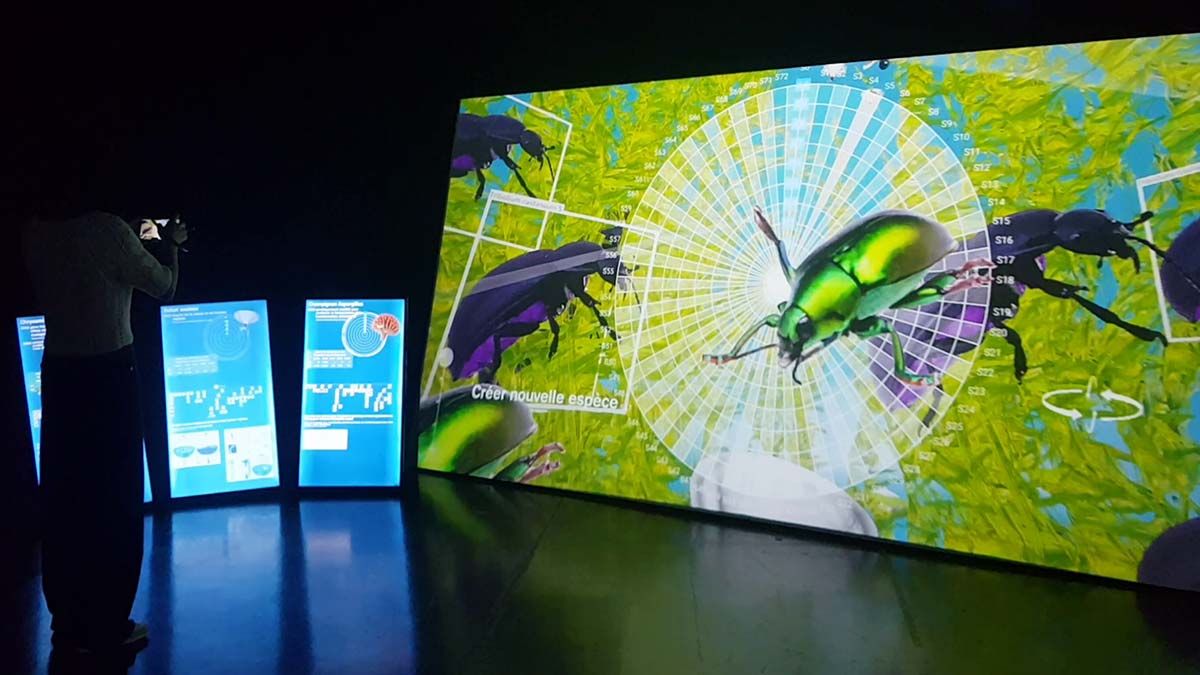
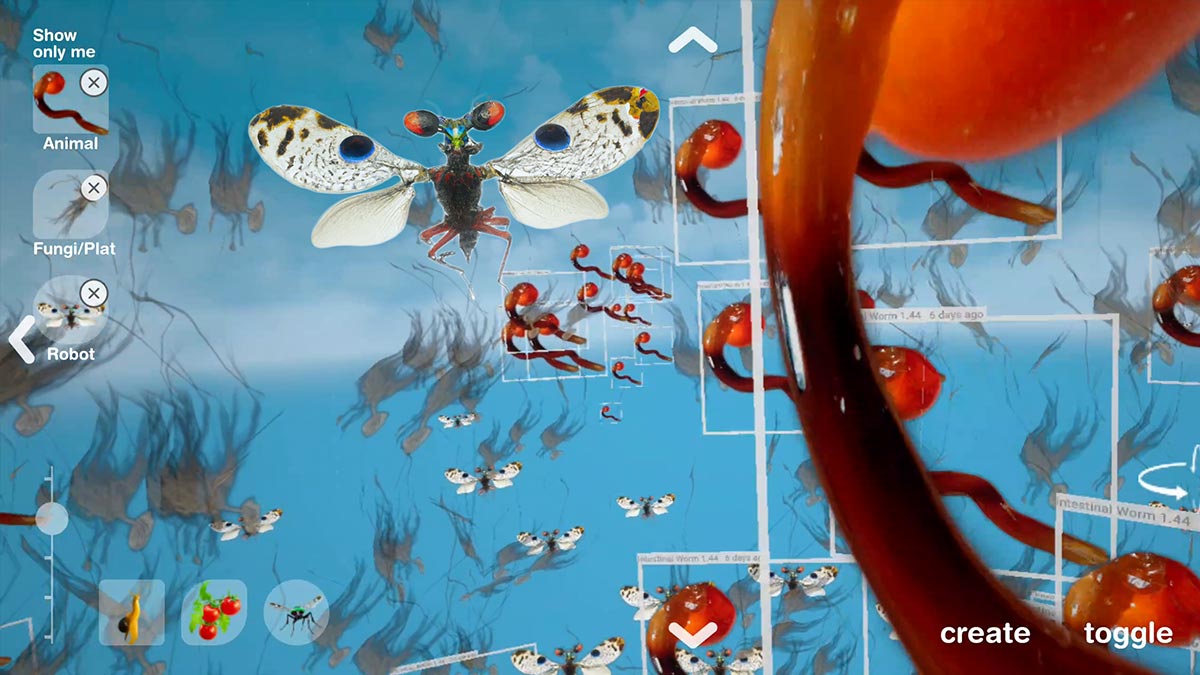
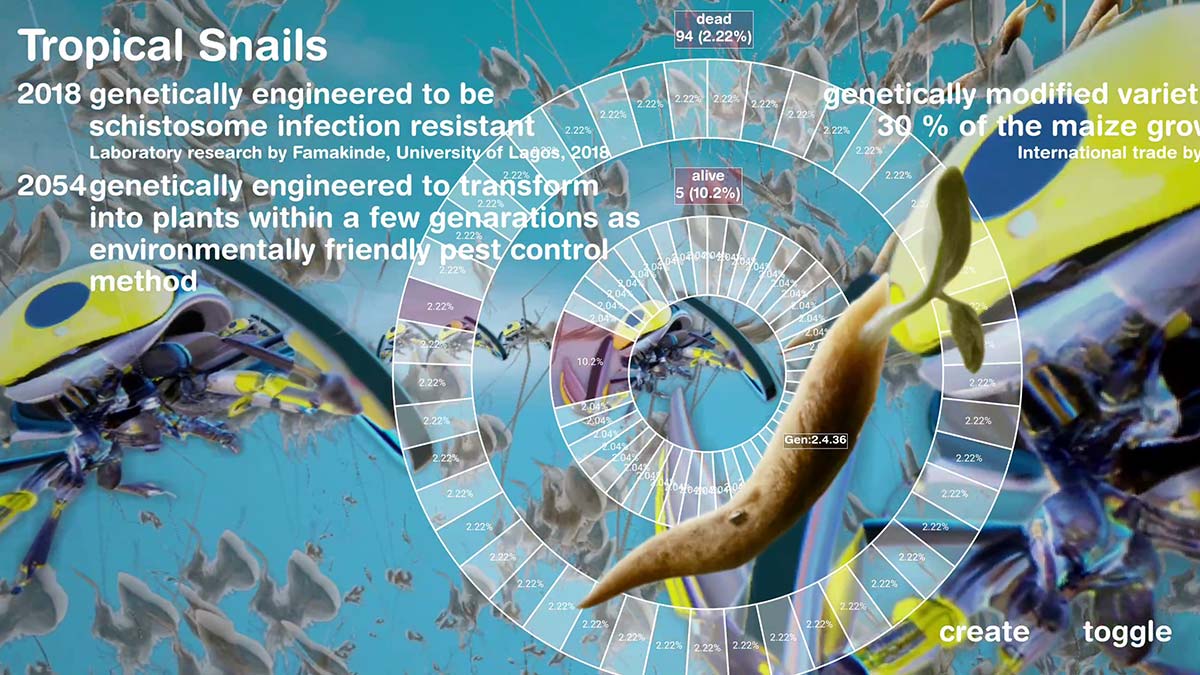
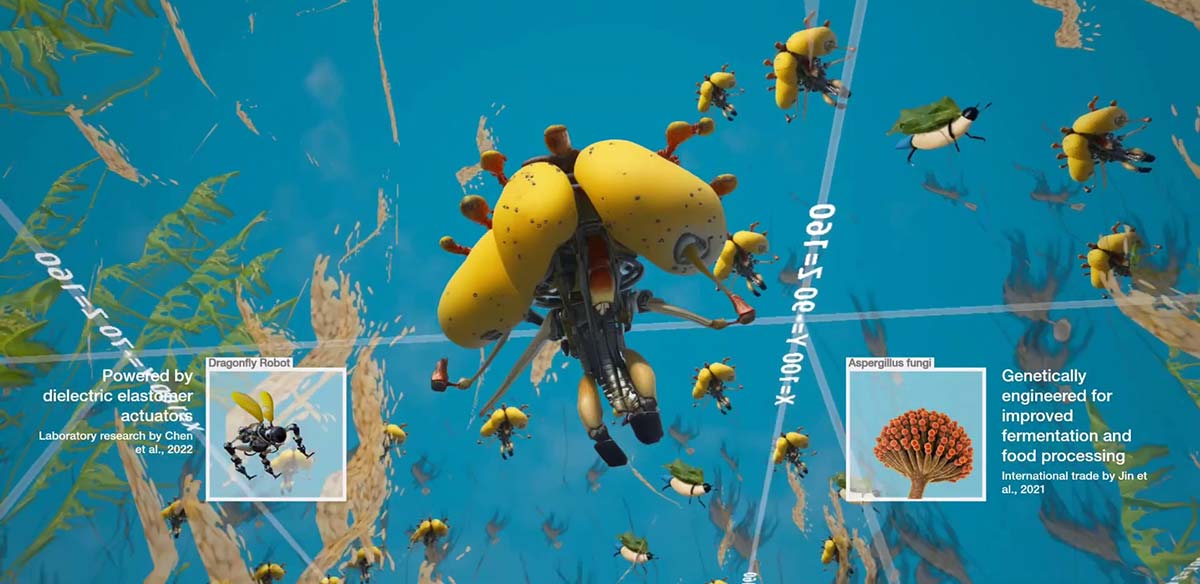
Due to the threatening predictions of species extinction and global warming, scientists and farmers are increasingly relying on technologies such as genetic engineering, synthetic biology and machine learning. Speculative Evolution imagines a speculative ecosystem 30 years from now, where artificial intelligence and biotechnologies work together to create and optimize species to withstand the increasingly hostile environment. From the perspective of an AI simulator, the audience is invited to create new variations of animals, fungi, plants, and robots, fly with these engineered and mutated species, and observe the changing ecosystem. Speculative Evolution responds to the trend of technology-assisted solution-making by constructing narratives of an uncomputable system under extreme control – what do we optimize, and what are we ignoring as a result? The project aims to inspect our tendency to simplify complex ecosystems by treating nature as a system that can be fixed.
Prototype 1: Adaptation (2024)
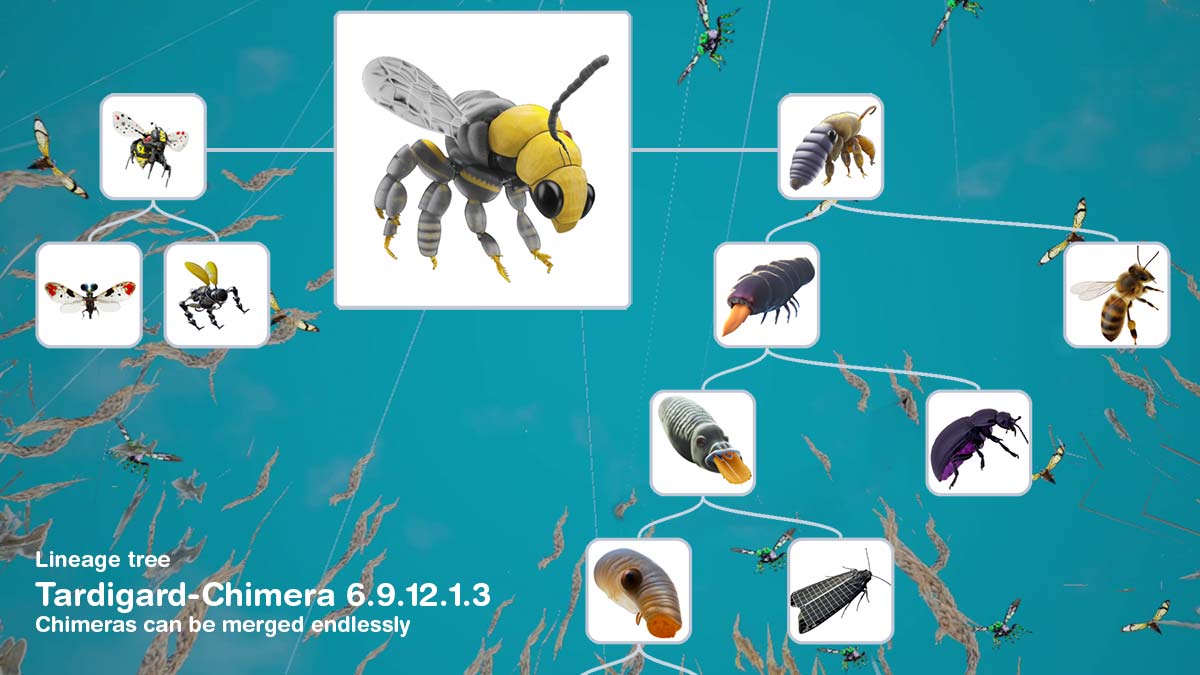
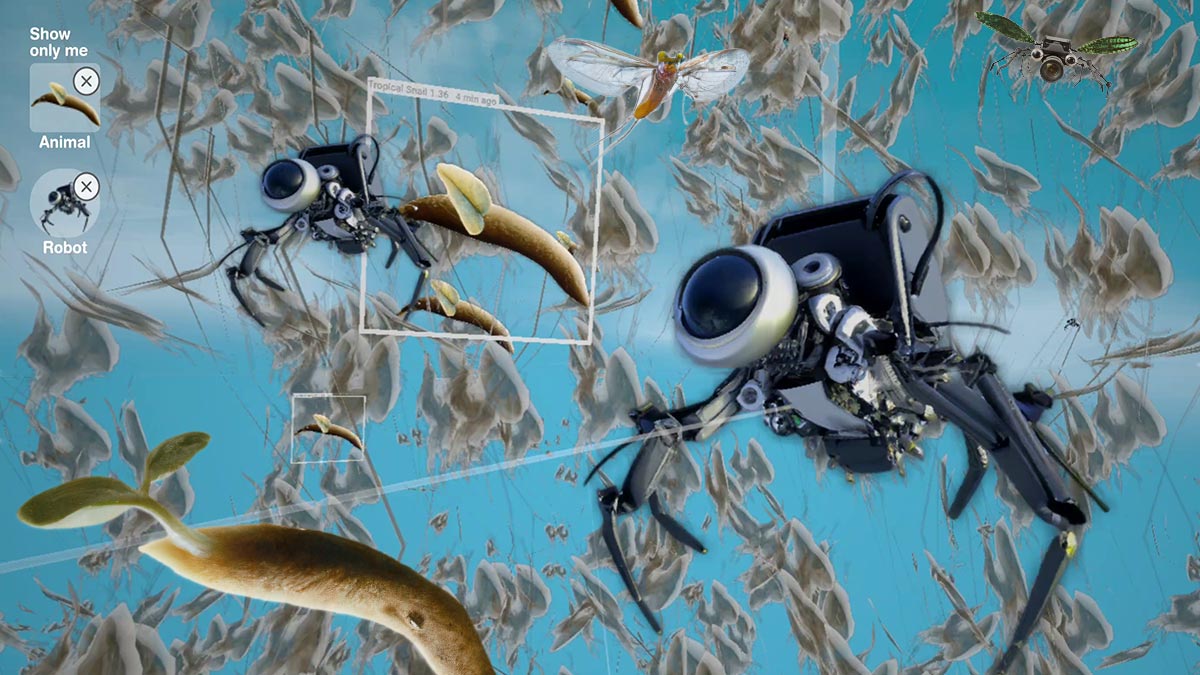
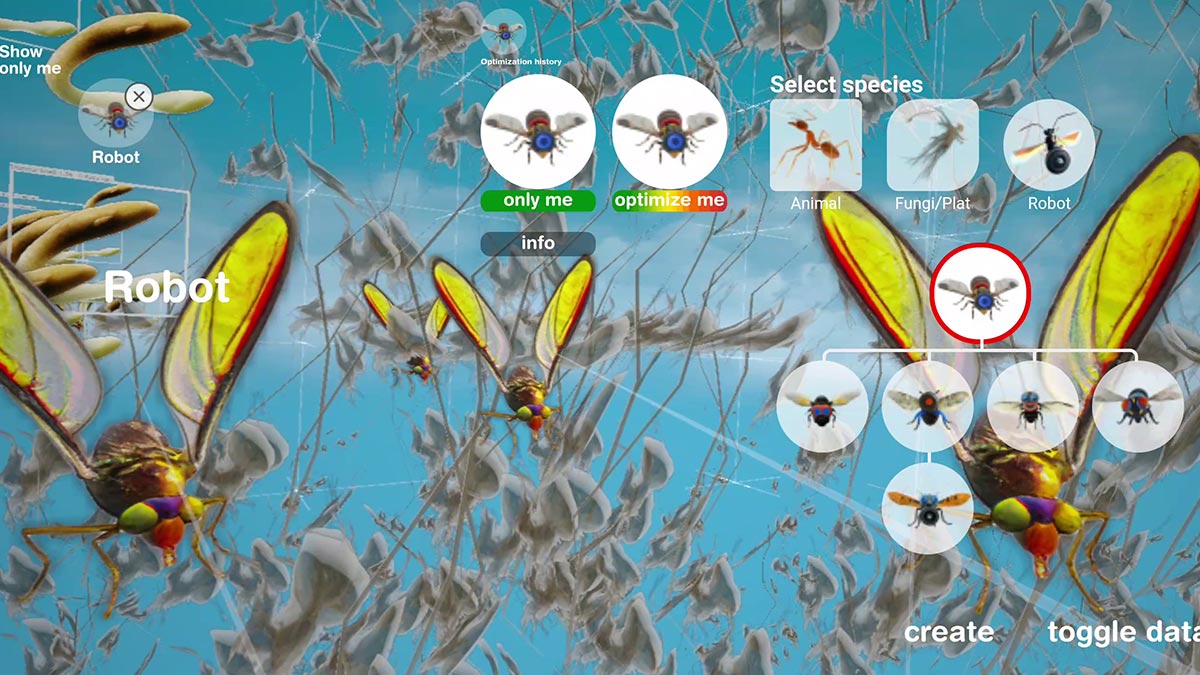
In the first phase of this speculative simulation, the focus was on the technological adaptation of existing life forms. Users decided which specific species—such as bees, snails, or rice—require evolutionary optimization to balance the ecosystem. Based on these choices, the AI generates new, resilient variations of these species. Within the app, this process is visualized through a lineage tree, documenting the development from the original natural form to the technologically modified variant.
Prototype 2: Synthesis & Chimeras (2026)
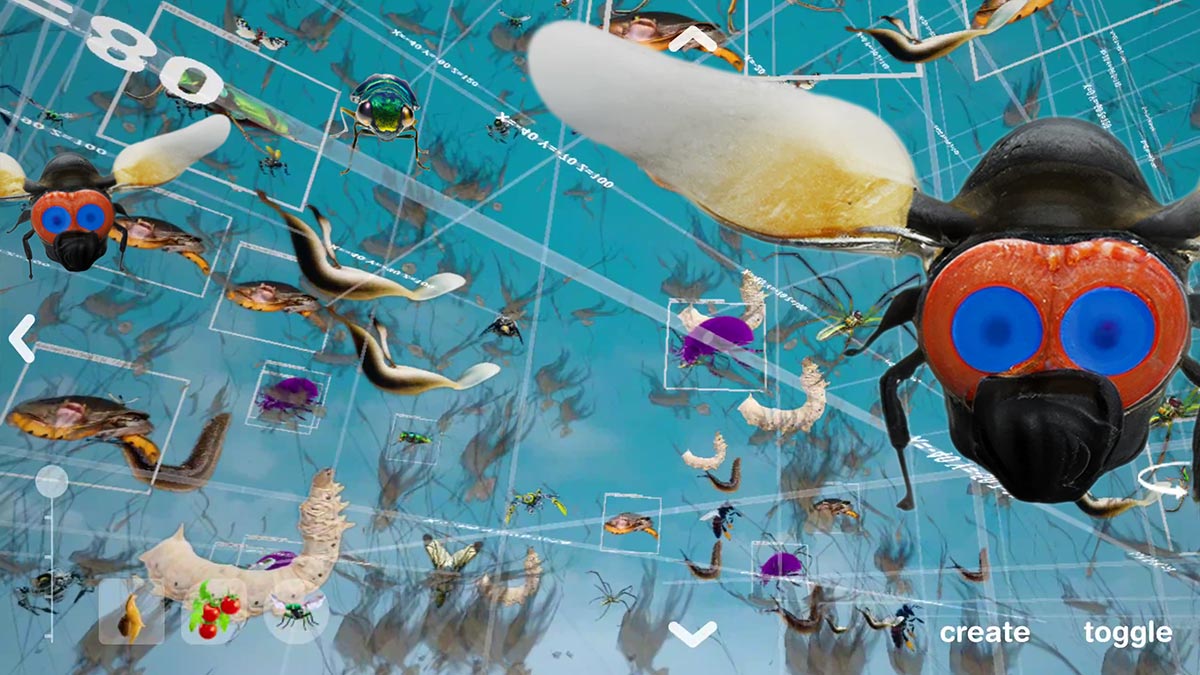
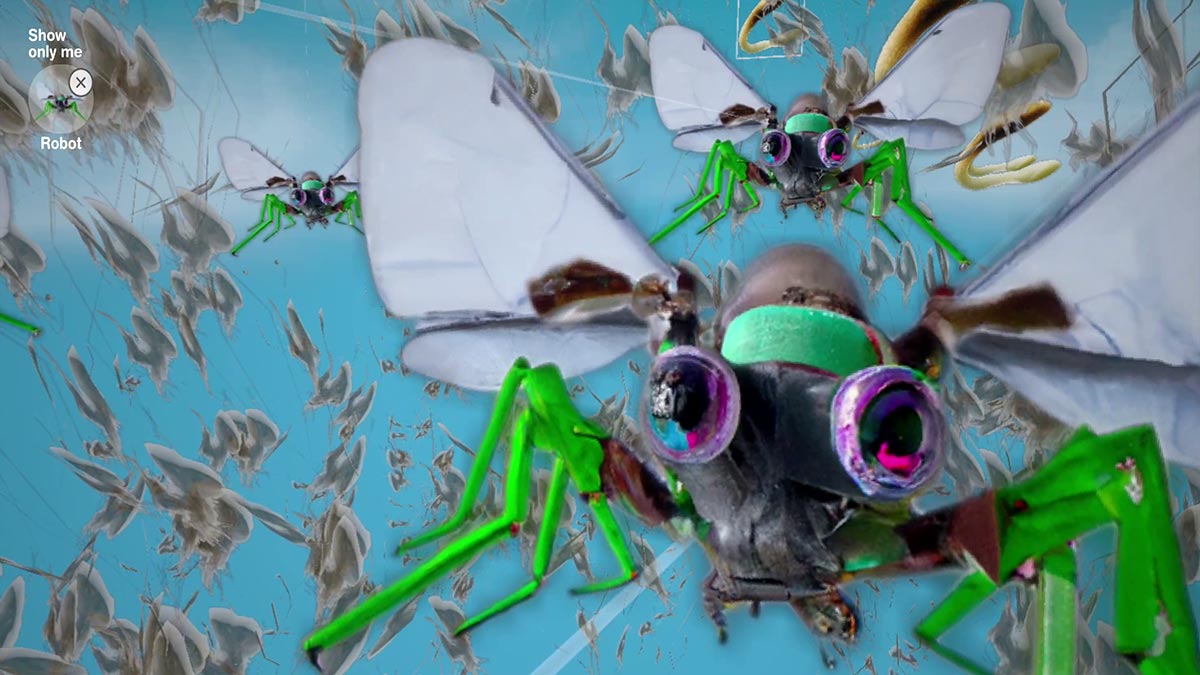
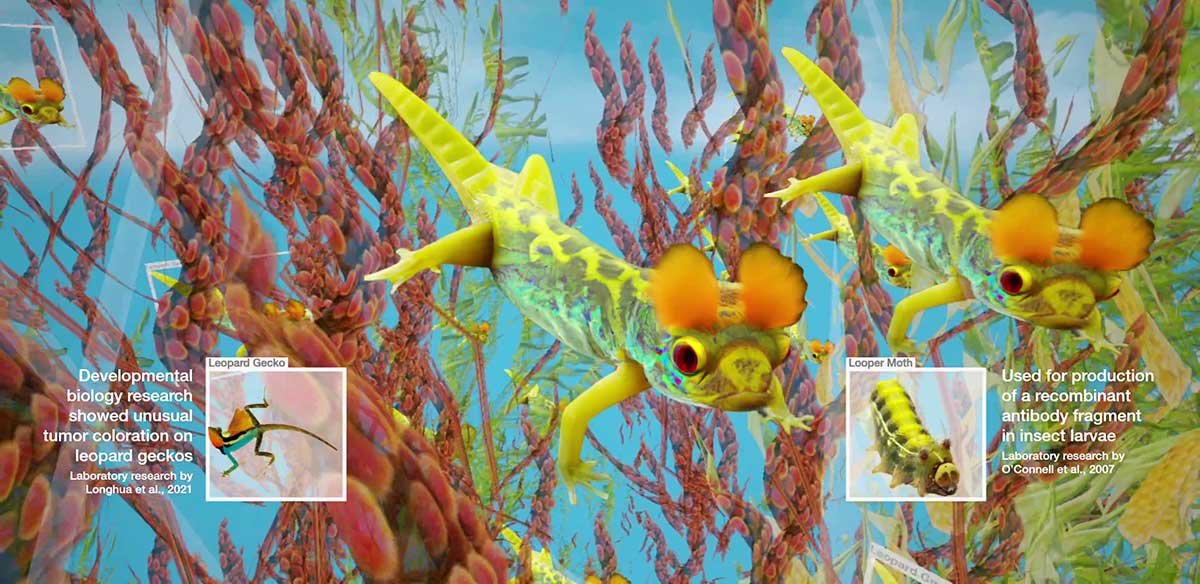
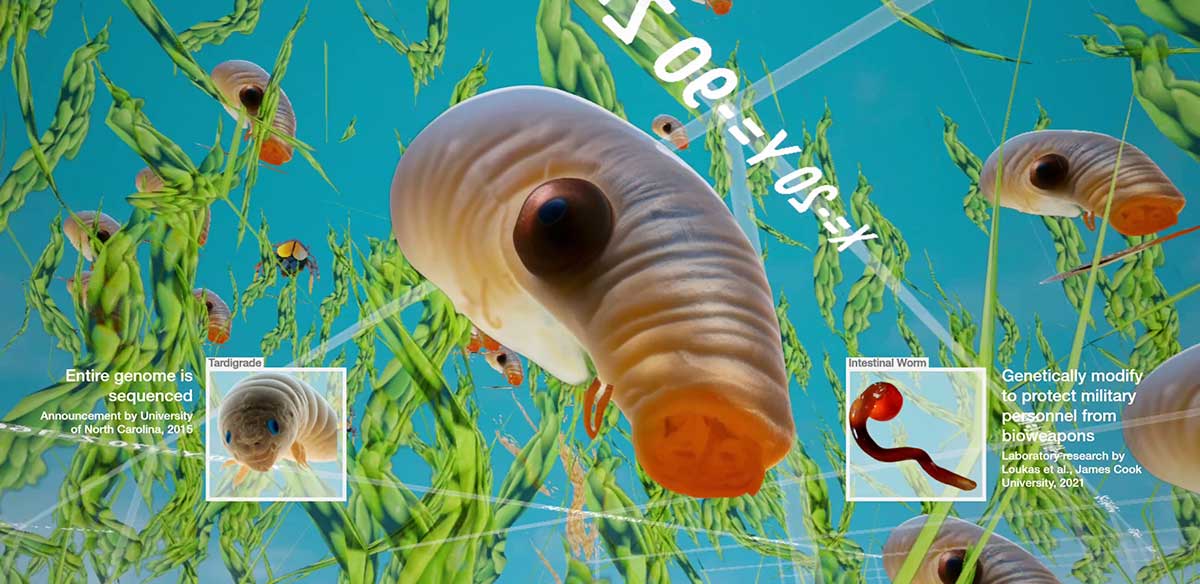
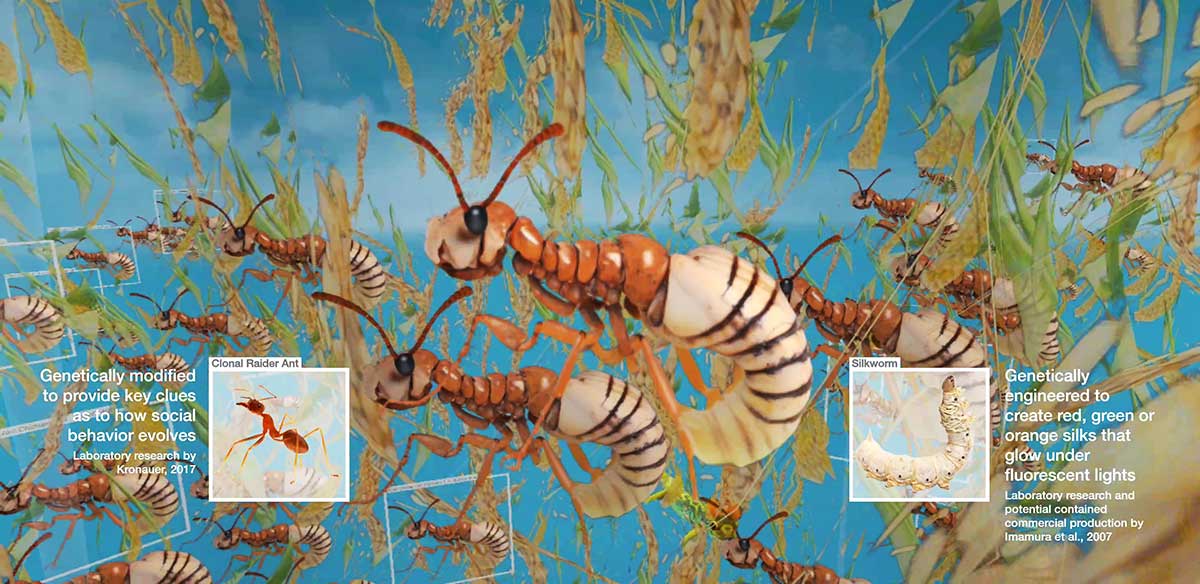
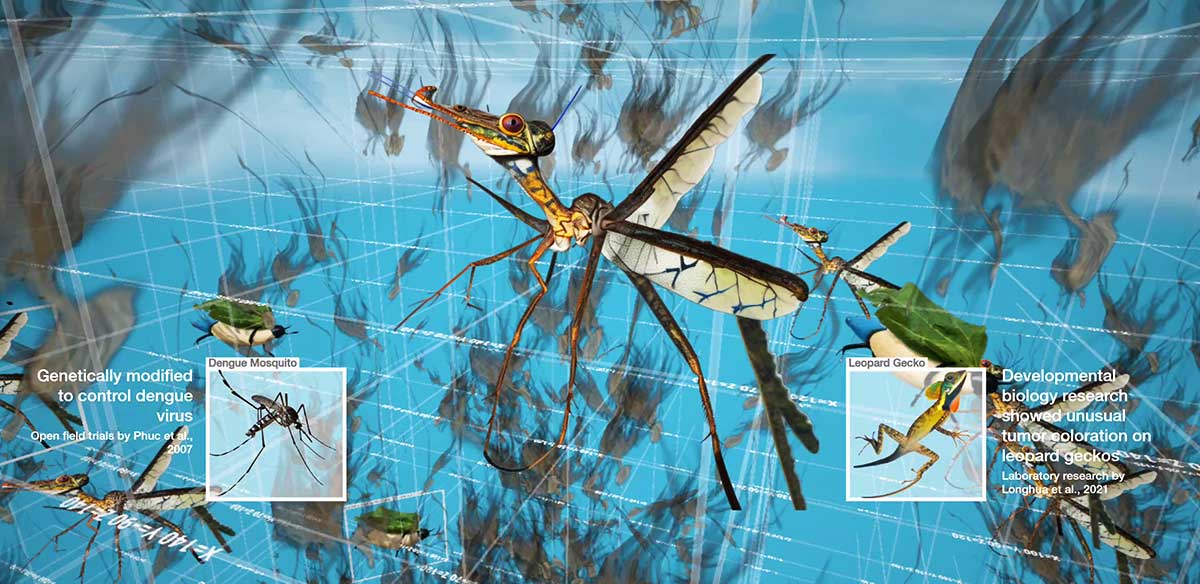
Prototype 2 completely dissolves biological boundaries: here, users create complex chimeras through the radical synthesis of animals, plants, fungi, and robots. This expansion enables endless recursion—every newly created hybrid can serve as a starting point for further merging.
This process of infinite reconstruction is displayed in an enhanced lineage tree, revealing the deep transbiological history of each chimera and highlighting how the lines between organic life and machinery blur in an endless cycle of optimization. While Prototype 1 focused on adapting existing species, Prototype 2 breaks open the limits of biological kingdoms. In this new phase, AGI no longer functions merely as a breeder, but as an architect of transbiological chimeras.
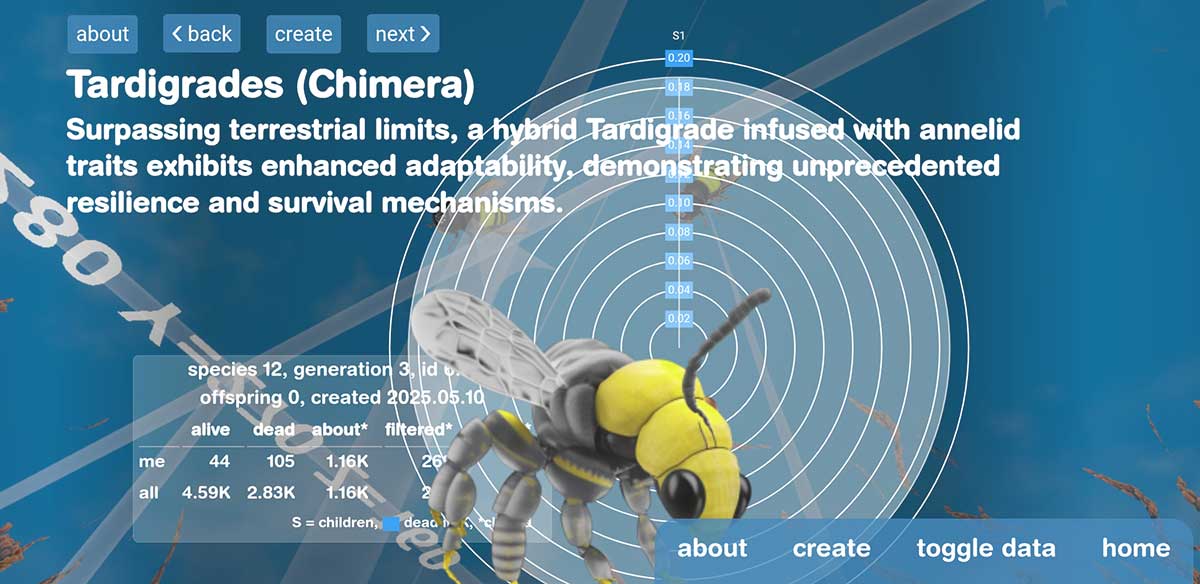
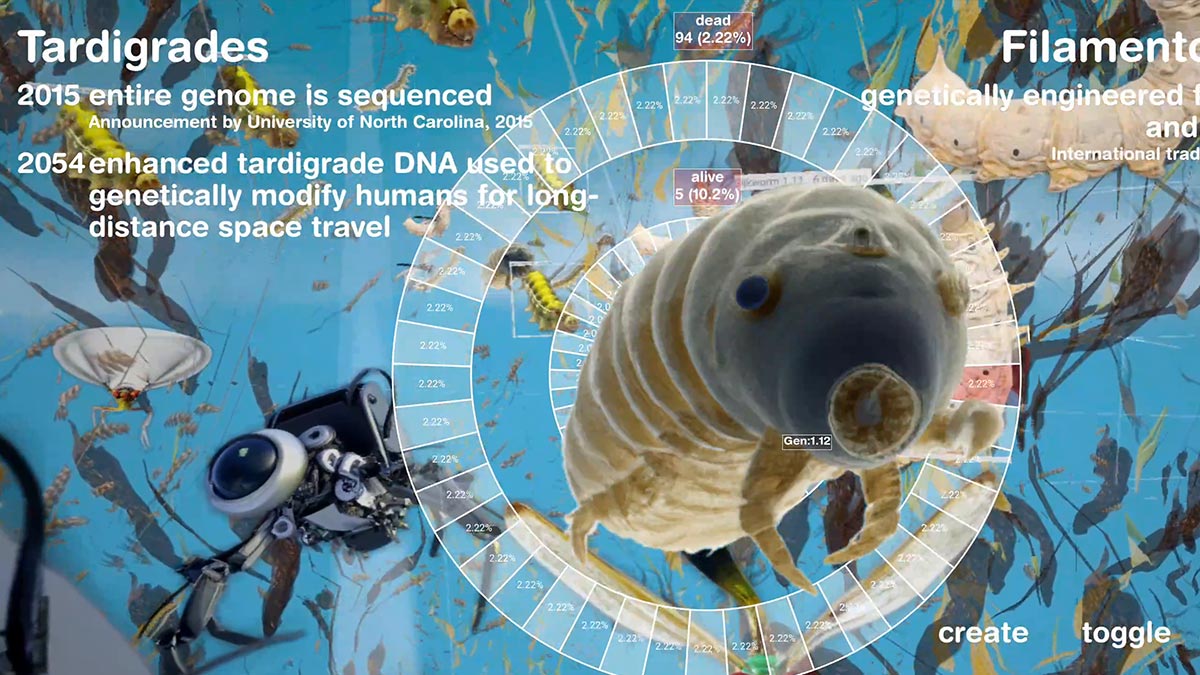
Every chimera receives a scientific functional description generated by the AI, defining its specific role and niche within a collapsing, high-tech ecosystem. Users see in real-time which tasks their chimeras perform—from filtering toxins to technological pollination—and how these new “service providers” populate the virtual world. This leads us to the central question: If we can completely rebuild nature according to our own visions, what kind of world are we creating?
Description
This experiment is a speculative simulation of a future ecosystem. The narrative sets in a speculative farm, 30 years from now, where artificial intelligence and synthetic biology work together to create an optimized environment for farmed species. An AI agent helps the audience to generate new species to balance a delicate ecosystem.
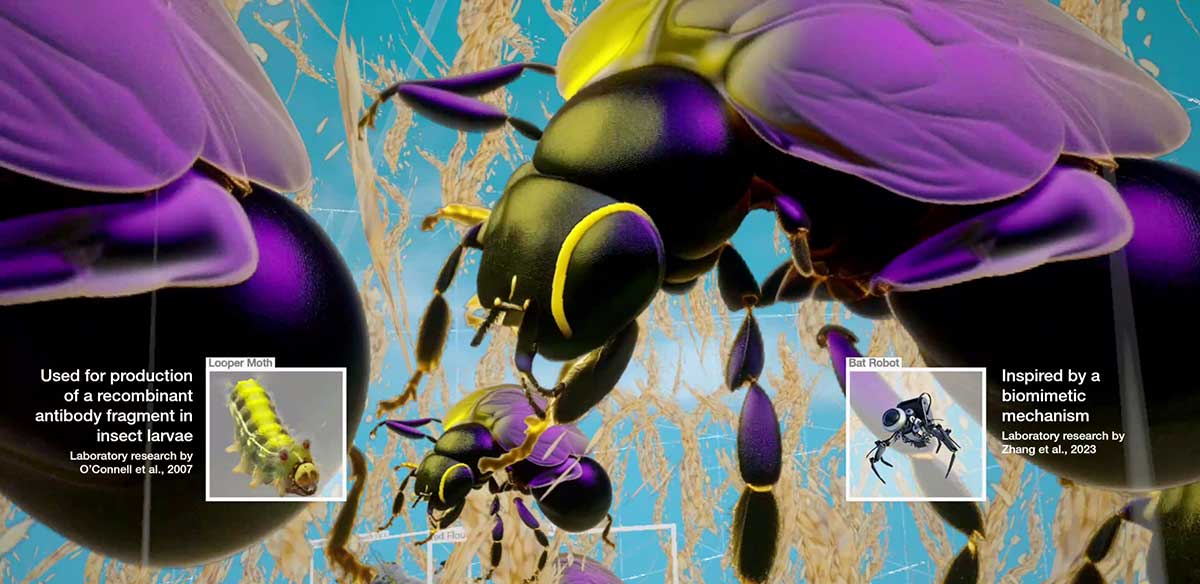
Based on scientific publications on synthetic biology, genetic engineering and robotics, we envisioned how species could be further developed to increase their resilience and formulated text prompts to create AI-generated images. As a result, each speculative species in the environment has a backstory rooted in real-life scenarios: bees which lose the sense of orientation due to pesticides; snails that are displaced by invasive species; rice that is exposed to increasing drought and temperature. We imagine a future where technologies like 3D printing, CRISPR, and synthetic biology play a part in modifying species for a higher chance of survival – genetically engineered super-bees with 3D-printed parts that restore their lost navigation skills; Hawaiian land snails with snake DNA to control the introduced snail invasion; genetically modified drought-tolerant and protein-rich rice.
Given the dire projection on global warming and species extinction, humans increasingly look to technology for creative solutions. In Under a White Sky, author Elizabeth Kolbert pointed to “control” as the fundamental false logic of the Anthropocene: “If control is the problem, still more control must be the solution.” As we navigate an increasingly delicate political atmosphere, technosolutionism dominates conversations about climate change.
Artificial intelligence has become the star of the technosolutionist way of thinking with its promises of creative problem-solving packaged in a “black-box technology”. The technology comes with its own human-imposed biases – what do we optimize, and who do we optimize for? When we try to compute an uncomputable system, whose needs do we consider and prioritize? Speculative Evolution looks at some of the technologies we use today and imagined a future where artificial intelligence takes them to an extreme. Machine learning and biotechnologies are currently used to identify, monitor, and map species, as well as create new genetic traits. It’s not hard to imagine a not-so-distant future where machine learning does the balancing act of optimizing for human objectives. We believe that this is not a utopia or a dystopia, but rather a direction in which we are heading.
Audience Experience and Impact
The audience interacts with the installation via smartphone, navigating through a speculative 3D environment. In the exhibition space, the mobile app serves as the interface for an immersive experience: audio is transmitted to a sound system while the mobile display is projected onto one or multiple walls.
In this experiment, the audience no longer just creates variations of individual species but constructs complex chimeras using AI integration. By freely combining animals, fungi, plants, and robots, hybrid life forms emerge that can be merged again and again in endless recursion. From the perspective of an AGI agent, users fly through the 3D environment alongside their own creations and those of all other participants.
The audience can observe how these new creatures might look and how they impact the ecosystem when created and optimized by artificial intelligence. Users can read scientific descriptions that assign each creature a specific ecological task—such as filtering pollutants or autonomous pollination. Through the enhanced lineage tree, the transbiological ancestry of each chimera can be traced back to its origins.
The virtual environment is infinite and can be navigated in all directions. The sonic sound experiences are specifically composed for this simulation and react dynamically to every movement. We hope to invite the audience to examine our tendency to simplify complex ecosystems by treat treating nature as a system that can be calculated, optimized, and entirely reconstructed.
Research
Speculative Evolution is a further development of the projects CAON and YANTO and was partly developed during a residency at the transmediale studio in Berlin and at a research residency in Pakistan. The research involved visiting institutions that conduct laboratory trials on animal genetic modification, such as the Max Delbrück Center for Molecular Medicine in Berlin and the LAMS Department of Life Sciences in Lahore.
Screenshots
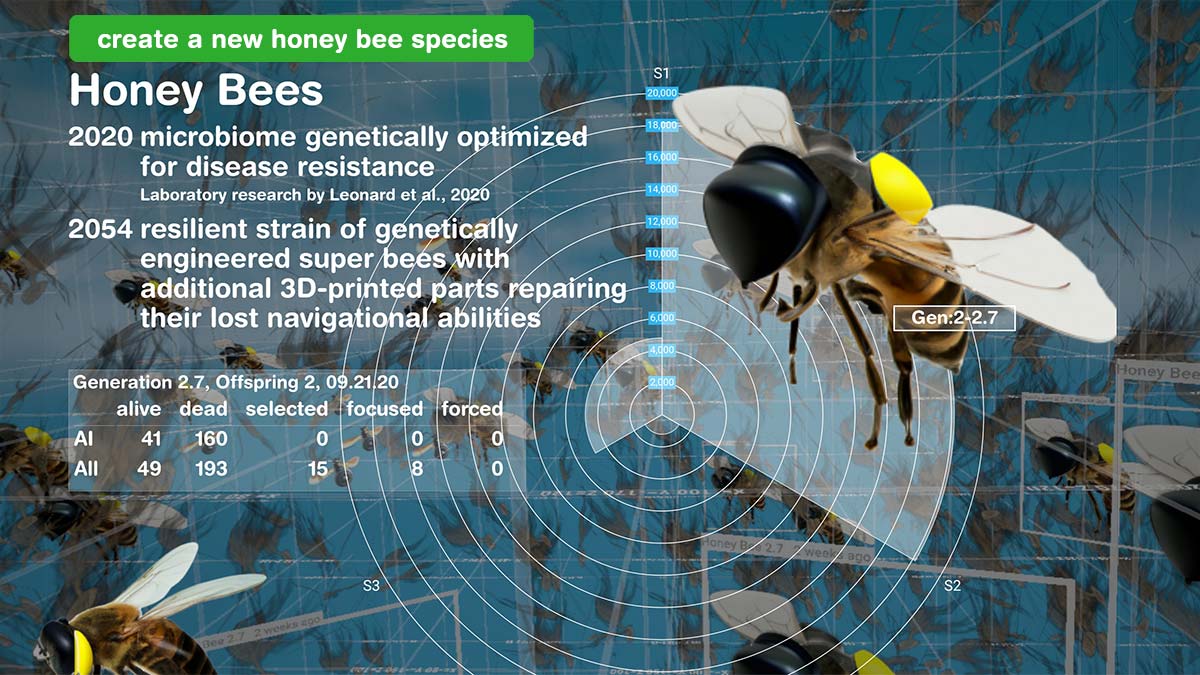
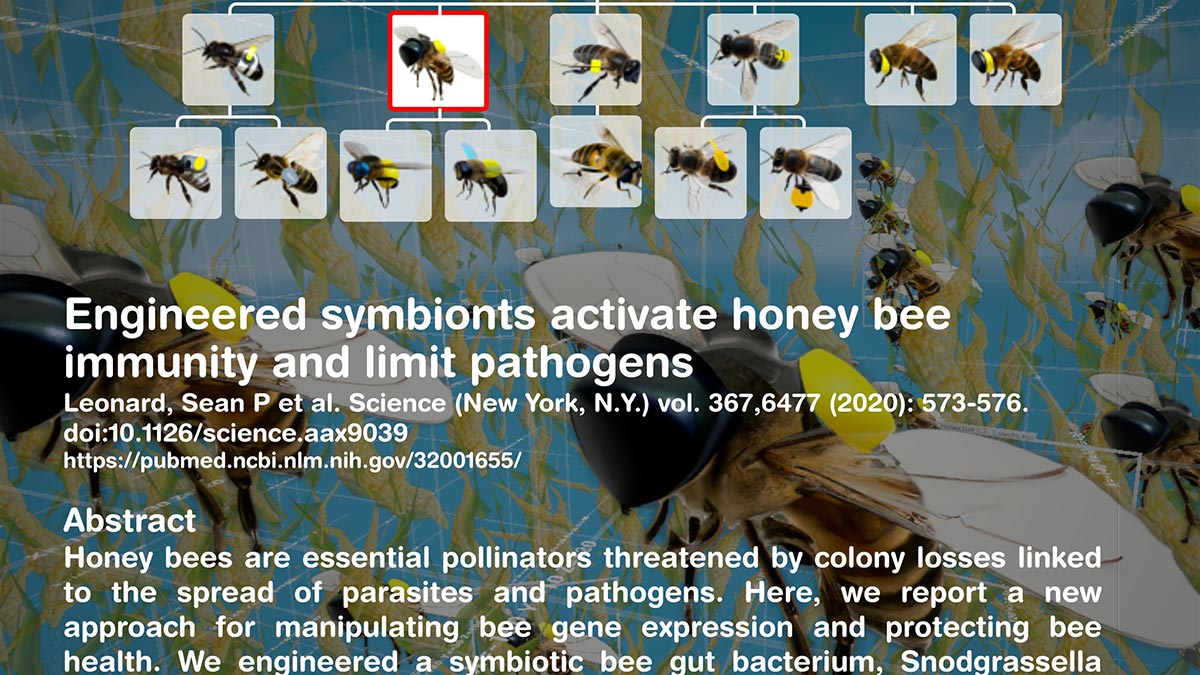
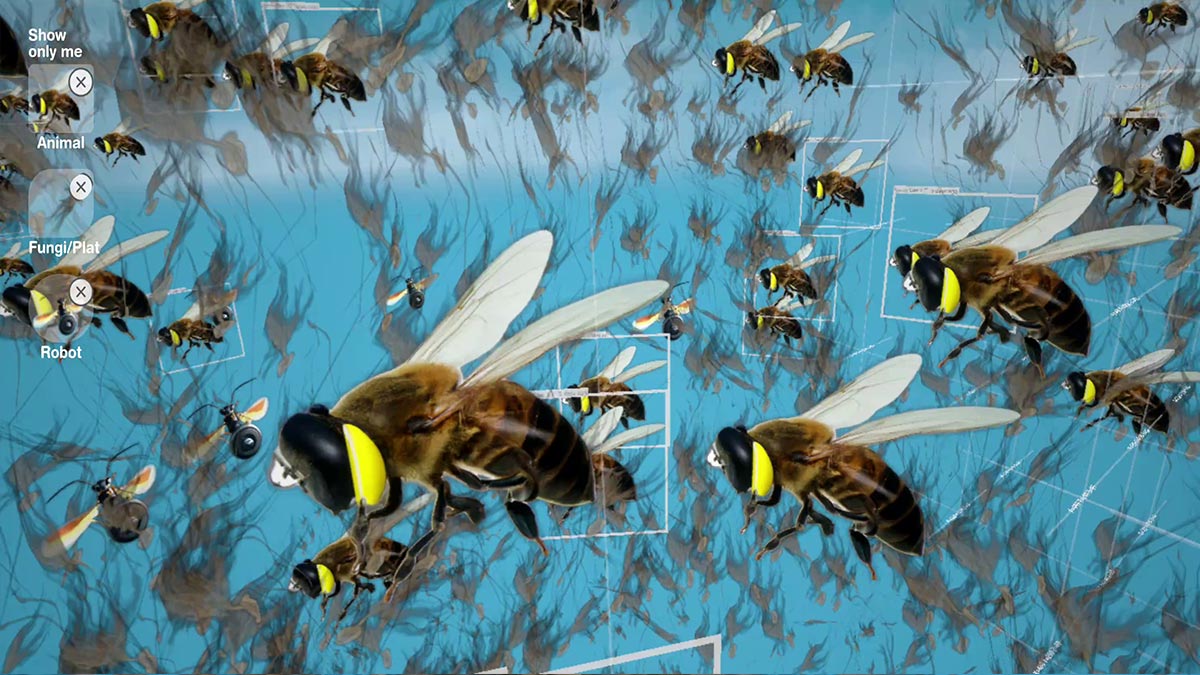
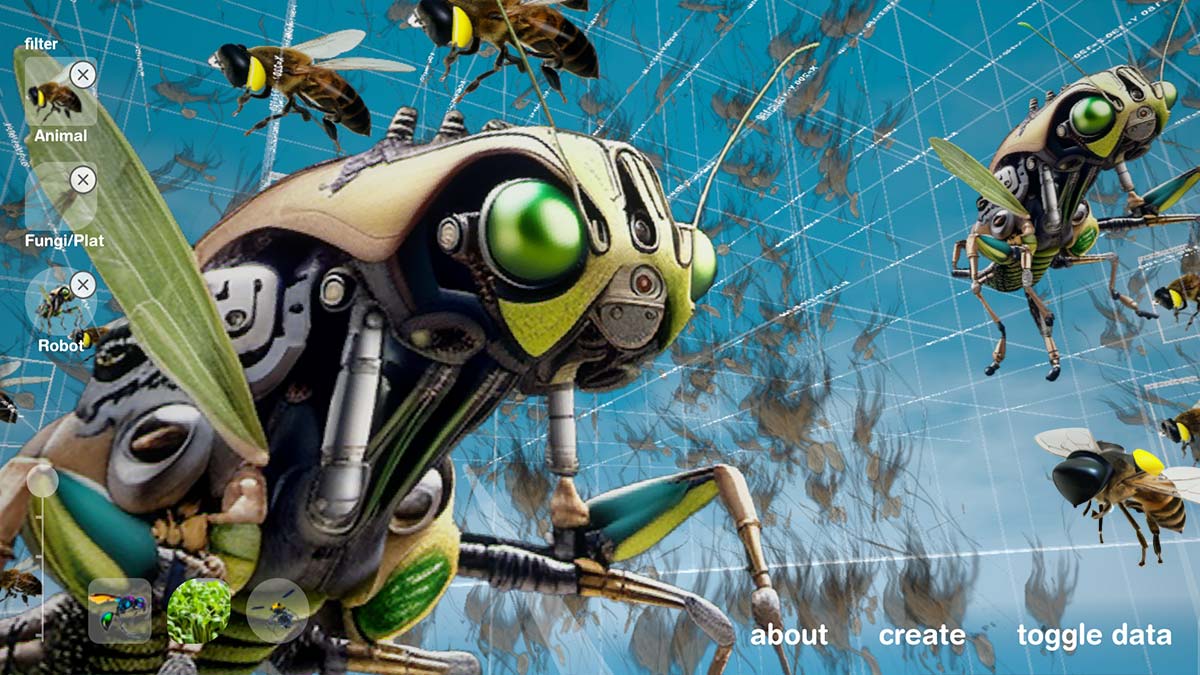
Screenshots Chimeras (Prototype 2)
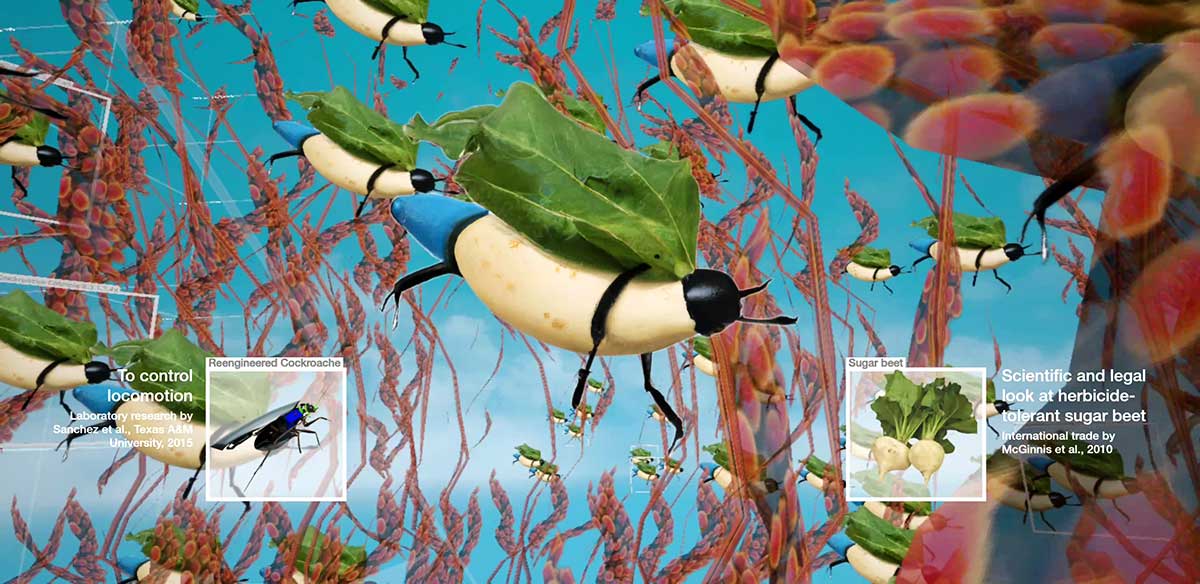
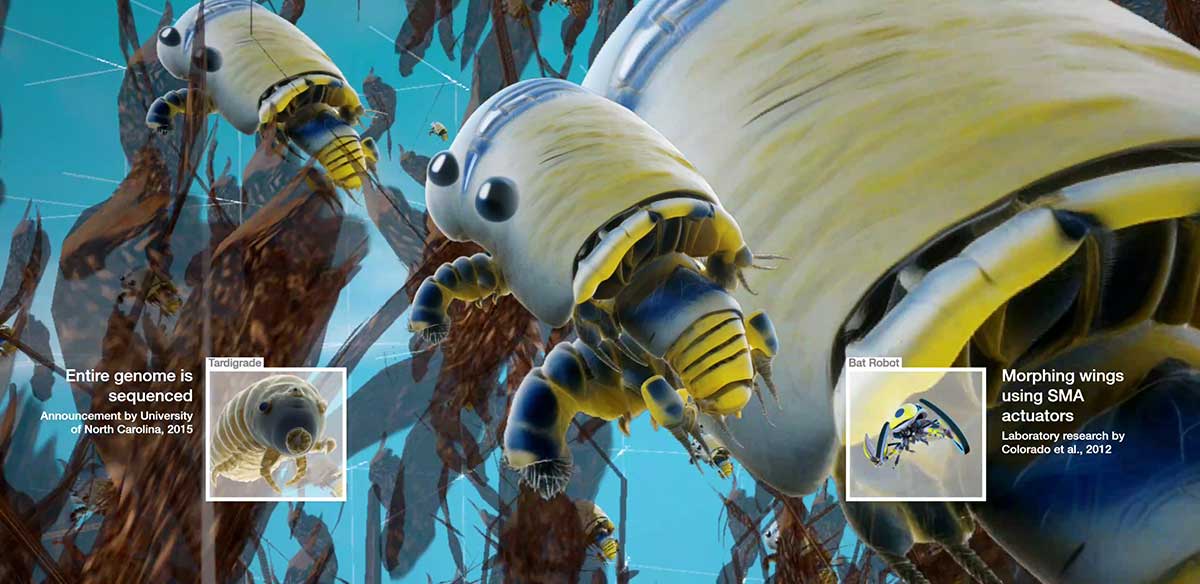
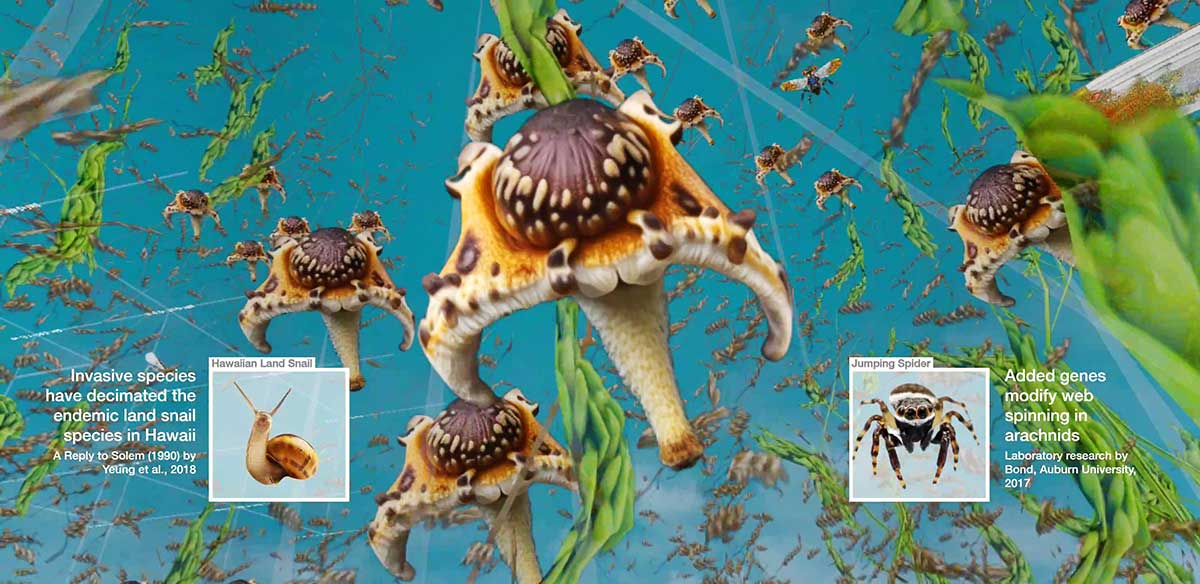
Speculative Evolution mobile app download (free)

Award
🏆 Speculative Evolution won the Expanded Media Award for Network Culture at the international competition of the Stuttgarter Filmwinter (2024)
Jury Statement:
Speculative Evolution PROTOTYPE-1 is a speculation about the future in a 3D game world, insane and yet frighteningly probable, almost baroquely exuberant and yet scientifically sound. In the age of the Anthropocene, Marc Lee holds up a mirror to a society playing God and viewing nature as a system that it can control and shape at will. Humans seem to have the upper hand here; what at first appears to be documentation of a well-researched scientific investigation, sucks the unexpecting viewer into a system where they are implicated in the creation of an entirely new ecosystem consisting of both known and mutated species of plants, fungi, animals and robot variants using an AI plug-in. However, evolutionary control is lost when the creations start to mutate into human-like creatures through the embedded evolutionary AI glitches. This world is all contained within a portable and interactive mobile app with sound by Shervin Saremi.
In the face of blatant environmental destruction and questionable human interventions into our biome and genetic structures, Marc Lee shows how we humans focus on our food chain for our own benefit without regard for other living creatures or the delicate balance in our natural systems. In doing so, the artist arouses legitimate concern and unease, but also inspires amazement and deeper consideration for our relationship to the natural world. The committee was also impressed by the commitment of the artist to his world building which has taken place over the past three years.
https://archiv.filmwinter.de/2024/en/blog
Manual
How to use
Speculative species
Technical rider for exhibitions